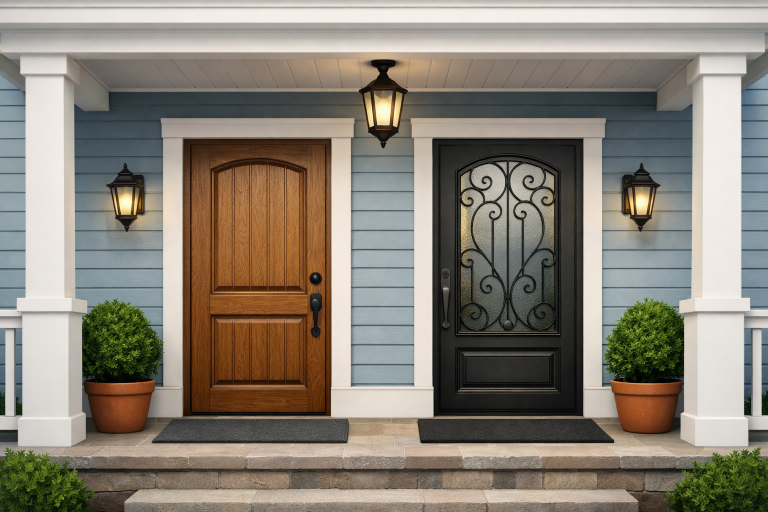
When it comes to selecting a front door, the choice between solid wood and iron is one homeowners face frequently. Your front entryway sets the tone for your home, shaping both aesthetics and security. Understanding the strengths and limitations of both materials will empower you to select a door that meets your functional needs and style preferences. For a wide array of beautifully crafted doors suited for any home, take time to explore https://grandentrydoors.com/ as you consider your options.
Front doors are a long-term investment that affects security, curb appeal, and maintenance requirements. Whether you favor timeless warmth or contemporary durability, evaluating the trade-offs between wood and iron will help ensure you make a thoughtful choice that adds value to your home.
Durability and Maintenance
Durability is one of the most defining differences between wood and iron front doors. Iron doors are celebrated for their resistance to warping, cracking, and rotting, making them ideal for nearly any climate or external condition. Maintenance for these doors typically involves occasional cleaning, lubricating hinges, and inspecting the finish to prevent rust. In contrast, solid wood doors are more susceptible to temperature changes and moisture. These elements can cause wood to swell, split, or rot if the door is not properly maintained. Homeowners should anticipate sanding, staining, or repainting wooden doors roughly every few years to maintain structural integrity and appearance.
Security Considerations
Security ranks high on any homeowner’s list of priorities. Iron doors surpass wood in terms of protective strength. Their robust frames and heavy-duty locking hardware make them extremely difficult to break through, deterring potential intruders. Iron doors often feature multi-point locks and reinforced frames. While a well-constructed, solid-wood door is also secure, it can be compromised more quickly than an iron door under intense physical force. The difference in resistance can be a key deciding factor for those looking to maximize safety at their home’s entrance.
Aesthetic Appeal
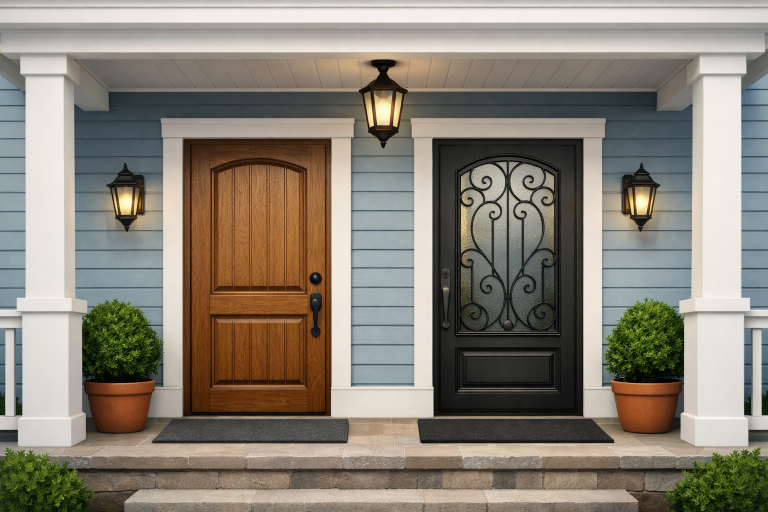
The visual impact of your front door plays a significant role in your home’s overall curb appeal. Wood doors are known for their natural beauty, warmth, and rich grain, which complement traditional, craftsman, or farmhouse styles. They can be customized in virtually any stain, finish, or style, making them incredibly versatile. Iron doors, meanwhile, impart a bold statement with sleek lines and can be customized with ornate scrollwork or contemporary glass inserts. This makes them a popular choice for modern, Mediterranean, and transitional homes. Both door types can be tailored to your individual taste, but with strikingly different results.
Maintenance Requirements
Maintenance is another critical concern. Solid wood doors need substantial upkeep. Regularly applying a sealant protects against moisture; failing to do so can result in warping or even rot, especially in humid or rainy environments. Wood may also require occasional patching and refinishing to restore its beauty. In contrast, iron doors are largely weather-resistant and only require periodic wiping down and a visual inspection for chips in the finish. Keeping the finish intact is crucial to preventing rust, but overall, maintenance is minimal. Additionally, inspecting hardware for loosening or wear ensures long-lasting performance for both door types, adding an extra layer of attention to routine care that benefits overall longevity. Establishing a light maintenance schedule, even for iron doors, can be a smart way to detect minor issues before they escalate.
Energy Efficiency
Maintaining indoor comfort and energy efficiency is essential for every household. Modern iron doors are manufactured with built-in insulation and thermal breaks, which significantly enhance their energy performance. These advancements ensure that iron doors are as capable as solid wood doors in preventing drafts and minimizing energy loss. Well-made wood doors naturally provide insulation due to their density, but their efficiency also depends upon proper installation and consistent maintenance to prevent gaps or leaks. When replacing an older door, be sure to check that the surrounding frame is well-sealed and that weatherstripping is applied to maximize efficiency and minimize drafts resulting from seasonal temperature changes. Even the most energy-efficient doors can underperform if gaps or poor installation undermine their insulation qualities.
Cost Considerations
Cost can vary widely depending on factors such as size, design, customization, and hardware. Wood doors often have a broad price range, particularly if a rare wood species or intricate designs are selected. However, recurring maintenance expenses such as refinishing and repairs can add up over the years. Iron doors typically require a higher initial investment, but their low maintenance needs and longevity may make them more cost-effective in the long term. Homeowners should consider the overall value, not just the purchase price, by factoring in both upfront and ongoing costs for each material.
Environmental Impact
The environmental footprint of your selected door is worth considering. Responsibly sourced wood from certified forests is a renewable resource and can be a green option. Still, wood preservation may necessitate chemical treatments, which have their own environmental impact. Iron doors, while not renewable, are highly recyclable and outlast wood, reducing replacement frequency and resource consumption over the lifetime of a home. Both can be manufactured sustainably, depending on your supplier and their sourcing policies. Opting for a manufacturer with a reputation for environmentally sound practices can make your new entryway even more eco-friendly. Researching such suppliers and inquiring about materials will further minimize your home’s footprint.
Conclusion
Both solid wood and iron front doors offer unique advantages. Your choice will be guided by specific needs, such as longevity, security, aesthetic preferences, low maintenance, or environmental responsibility. Assess your priorities and the local climate before investing. Consulting with a reputable specialist or visiting showrooms can help you discover a door that perfectly fits your vision and your home’s requirements. Take the time to evaluate all options, as the right front door not only enhances curb appeal but can also improve energy efficiency, security, and the home’s long-term value.