
The earliest years of a child’s education set the stage for academic achievement and emotional growth. Enrolling children in pre-K programs near me not only introduces foundational academic concepts but also builds the social, cognitive, and emotional skills that help children thrive well beyond the classroom. Pre-kindergarten, or pre-K, serves as a transitional bridge between the home environment and elementary school, offering valuable experiences that children rely on throughout their educational journey.
Research shows that children who attend pre-K are better equipped for primary school both academically and socially. They tend to demonstrate stronger classroom engagement, higher levels of self-sufficiency, and improved peer relationships. These important outcomes stem from high-quality pre K programs near me that tailor learning through play, structured routines, and interactive experiences.
Early learning is not just about gaining knowledge; it is about nurturing inquisitive minds and forming the skills children need to adapt and relate to others. Whether making friends or trying new activities, children in pre-K settings benefit from the guidance of trained educators who understand the milestones of early childhood development.
Cognitive development forms the core of early educational experiences. Children in pre-K programs near me are often exposed to engaging, play-based activities that foster critical thinking, memory, and reasoning skills. Teachers use games, puzzles, and group projects to encourage analysis and creativity, which are vital to a child’s intellectual growth.
Improved Social Skills
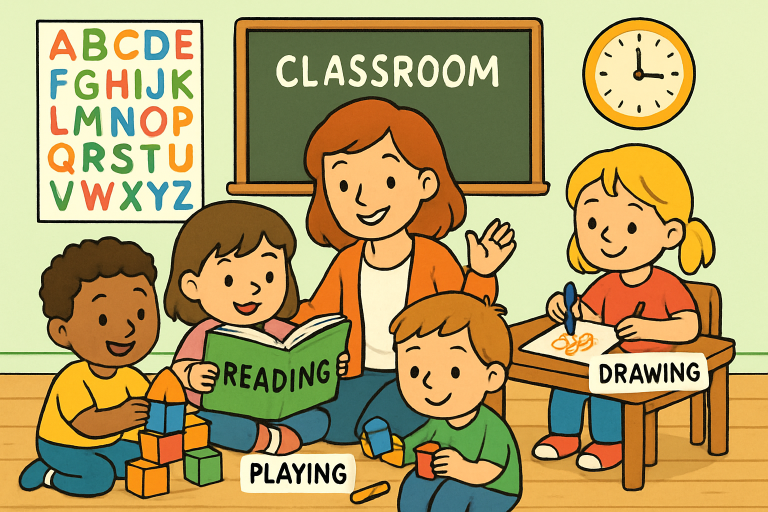
Social development is a hallmark of the pre-K environment. In classrooms and on playgrounds, children learn to interact with peers, cooperate on tasks, share resources, and resolve conflicts. Many families seek out pre K near me programs to provide structured opportunities for these interactions. These daily exchanges teach kids how to express empathy, manage feelings, and build friendships that often form their earliest support systems.
Group activities facilitate understanding of group dynamics and social cues. By learning to navigate these scenarios, children prepare for the collaborative nature of elementary school and beyond. Developing strong social skills early reduces the risk for later behavioral challenges, helping children adapt to a world filled with diverse perspectives.
Language and Communication Development
Rich exposure to language forms a key pillar of pre-K programs. Storytelling, music, and conversation with both teachers and peers boost vocabulary, comprehension, and the ability to articulate thoughts clearly. Children who are immersed in language-rich environments demonstrate advanced linguistic skills, setting the foundation for literacy.
These skills not only influence reading and writing proficiency but also enhance a child’s self-confidence in expressing ideas and emotions. The PBS discussion on the importance of preschool notes that early language development is tightly linked to future academic achievement, making pre-K a critical stage for nurturing communication.
Emotional Regulation and Self-Control
Pre-K programs introduce children to the structured routines and expectations found in formal school, offering a safe space to learn about feelings and behavior management. Daily routines, guided transitions, and teacher-led social instruction allow young learners to practice patience, handle disappointment, and celebrate achievements.
Through role-playing and cooperative games, children begin to recognize and navigate their emotions while interacting harmoniously with others. These lessons in emotional regulation become invaluable as children encounter new challenges in school and life.
Early Literacy and Numeracy Skills
Quality pre-K programs incorporate foundational literacy and numeracy skills through fun, everyday activities. Children might trace letters, count objects, or sing rhyming songs, each of which supports early reading and math comprehension. Familiarity with these concepts ensures a smoother transition into kindergarten and sets the stage for continued academic growth.
Pre-K learning is intentionally playful and interactive, making early academics enjoyable. Kids gain comfort with key ideas like letter recognition, sequencing, and number sense, which underpin later learning success.
Encouragement of Curiosity and Exploration
Beyond formal skills, pre-K classrooms foster a spirit of discovery and a true love for learning. Educators design activities that encourage children to observe, question, and experiment with the world around them. This sense of curiosity helps form resilient, resourceful learners with the confidence to tackle unfamiliar situations and problems.
With supportive guidance, children find joy in exploring new interests and abilities, which can set a pattern for lifelong learning and achievement.
Final Thoughts
The benefits of pre-K programs reach far beyond academic performance. At their best, these environments nurture every aspect of a child’s development, cognitive, social, emotional, and creative, preparing them to enter school confident, curious, and equipped to succeed. By choosing high-quality early learning experiences, families give their children the strongest possible start on the journey through education and life.