
Summer brings long stretches of unstructured time that can leave children unsure of what to do next. The “I’m bored” mentality can surface even when many options are available. This blog explains practical ways to help children navigate slow moments with clarity and purpose. It outlines strategies that encourage steady engagement, independent decision-making, and a balanced pace during the season. Each section offers direct guidance that families can apply without complex preparation. Summer should be easy to manage and an enjoyable time for everyone.

Via Pexels

Create a Basic Day-to-Day Routine
Having a routine can help your child feel less bored, knowing that something is scheduled for later. But you don’t have to be super structured about it. All you need to do is make sure your child has some basic anchors, like the time of day for breakfast, lunch, and dinner, and a general idea of what happens in between meal times. Knowing, for example, that after breakfast we are allowed to watch a tv program and after lunch we play outside, ride our bikes, or make a fun snack to enjoy. Having a little structure gives kids room to settle into the tasks at hand and not always needing adult guidance.
Provide General Ideas About What to Do
Kids often say “I’m bored” simply because they cannot choose what they want to do, or they are spoiled with too many choices. Offering a few general ideas can remove this roadblock. Kids can look at the options and pick which ones interest them most. You can store those options in a designated container or shelf, or even create a list of possibilities. The trick is to provide enough variety without overwhelming them with too many options. Fewer options make it easier for kids to choose one option and go for it quickly.
Promote Independent Work
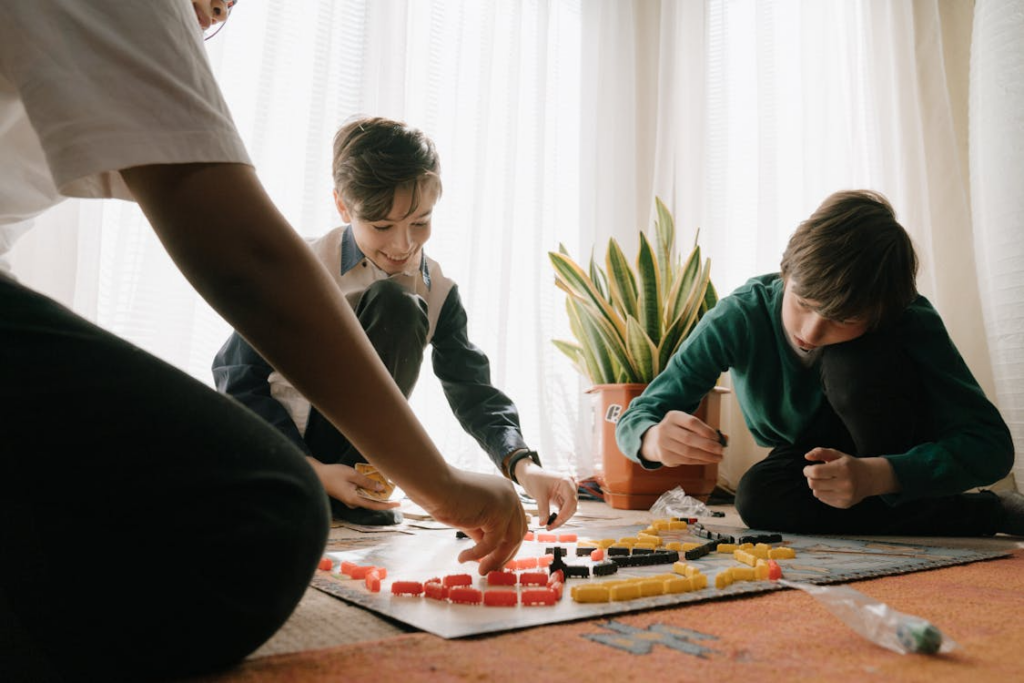
Independent work promotes critical thinking and concentration. This gives kids a way to explore their interests in a relatively low-stress manner. You can create areas in your home where kids feel comfortable working independently. For example, building blocks, puzzles, arts & crafts, and open-ended materials all promote independent work by providing numerous potential paths forward. However, it is important to note that some children may need a reminder, or two, that they can start an activity without constantly seeking suggestions for new ideas. A very important part of starting a project is finishing it, even if you need to get involved or motivate them a bit.
Utilize Outside Time as a Break
Being outdoors tends to improve a child’s mood and increase their energy level. Taking kids outside for just a bit can really reduce fidgety behavior. Your family can plan a quick walk, a game, or an exploration of a nearby park, yard, or courtyard. The goal is to take a break that can slow down the pace of the day. Grass, trees, birds, and other natural features around us tend to spark curiosity without much extra equipment. Also, many kids come back inside feeling better able to focus on the indoor activities.
Via Pexels

Integrate Household Tasks
Completing household tasks can provide a sense of routine and importance. When children assist with simple cleaning, organization, or sorting, they see the value of their contributions to the household. Household tasks can serve as a break from pure recreation and allow children to engage in a productive activity. Be mindful of making the responsibilities fit the child’s age and abilities and follow a pattern. Younger children can complete tasks such as matching socks and helping water plants.
Add Social Interaction in Measured Ways
Social interaction can support the development of communication and social cooperation skills. Organizing short playdates with the neighbors, relatives, or friends can add a new dynamic to the day. The playdate doesn’t need to be planned out extensively. Typically, using a familiar location and easy-to-use toys or materials will encourage the children to collaborate comfortably. Social interaction can also enable kids to share ideas and possibly find common interests. As an adult, you can monitor the social interaction and adjust the length of the visit according to the child’s comfort level.
Develop Strategies Using Community Programs
Many community programs exist as an alternative to informal summer days filled with excessive free time. Many libraries and recreation centers, along with other local organizations, offer inexpensive, structured activities during the summer months. Children may be exposed to new experiences through these types of community programs, which many would otherwise not be able to afford. For some families, the structured nature of community programs provides a sense of predictability for families who require predictable routines. A summer day camp for kids can be a great way to strike a balance between spending time at home and participating in a more formalized group setting.
Promote Skill-Building Projects
Skill-building projects allow children to spend quality time on a task with defined steps, such as crafting, achieving reading goals, conducting simple scientific observations, or learning basic cooking skills. In addition, a skill-building project is typically designed so that the tasks build upon each other, creating a sense of accomplishment for the child and providing motivation to continue working on the project. The structure of a skill-building project teaches children to be patient, allowing them to see that each step builds upon the previous one and encourages them not to give up too quickly.
Develop a Quiet Time Routine
Quiet time does not necessarily mean it is time for your child to go to bed. Instead, quiet time is a designated block of time that allows children to participate in low-stimulation activities. Examples of acceptable quiet time activities are reading, drawing, or listening to a story. Quiet time provides children with an opportunity to “recharge” and refocus their attention. By establishing quiet time routines, children will learn to self-regulate their behaviors and develop the ability to manage downtime without constant adult supervision.
Managing the “I’m bored” summer blues involves steady, practical choices rather than complex plans. Blending structure with flexibility, families can create an environment that supports engagement and independence. Simple routines, clear options, outdoor resets, and community resources can reduce uncertainty and encourage meaningful activity. Summer breaks soon become easier to manage and more predictable for everyone.