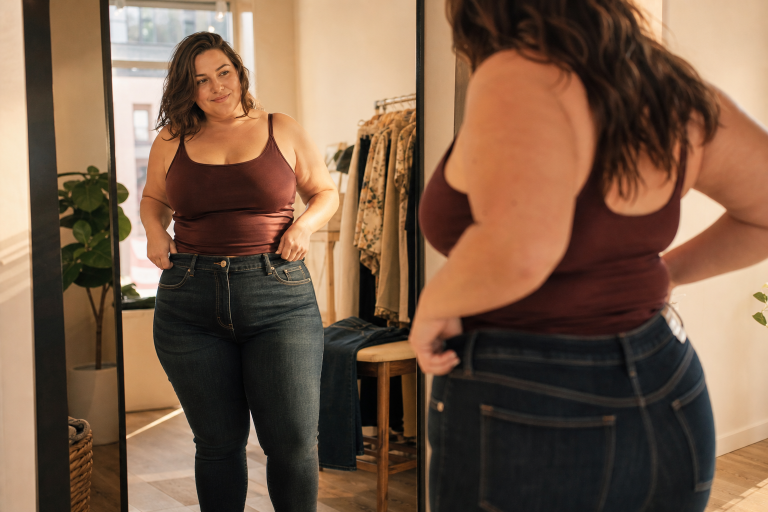
Finding jeans that feel comfortable from morning through evening starts with more than choosing a size. Rise, leg shape, stretch, and waistband construction all affect how denim sits, moves, and looks on your body. This plus size jeans fit guidebreaks down the details that can make shopping for denim feel simpler and more personal.
The right pair should support your everyday routine, whether that means sitting at a desk, commuting, running errands, dressing up for dinner, or relaxing on the weekend. Instead of chasing one “best” silhouette, focus on the fit details that make you feel secure, comfortable, and like yourself.
Our Fits: Find Your Preferred Leg Shape
Leg shape changes the overall feel of an outfit and affects how jeans work with different shoes. Denim is traditionally a sturdy twill fabric, but modern construction and stretch options give shoppers far more freedom in how a silhouette feels and moves. Understanding the basics of denim’s twill construction can also help explain why some pairs feel structured while others feel soft and flexible.
- Wide Leg: Roomy from hip to hem, with an open, relaxed line. This fit pairs well with fitted tops, tucked-in shirts, and shoes with a little height.
- Baggy: Generous through the hip and leg for an intentionally loose, casual look. Choose this shape when ease and laid-back styling are priorities.
- Boot: Fitted through the thigh with a subtle opening below the knee. Boot jeans are designed to work naturally over ankle boots, heeled boots, and platforms.
- Flare: Slimmer through the thigh with a more noticeable sweep at the hem. Flares create length and bring a bold, retro-inspired finish to an outfit.
- Barrel: Rounded through the leg, then tapered near the ankle. This shape offers volume without the full width of a wide-leg jean.
- Straight: Balanced from thigh to hem, with a clean and versatile profile. Straight jeans are an easy choice for everyday wear and simple outfit building.
- Boyfriend: Relaxed through the hip and thigh, often with an easygoing, borrowed-from-the-boys feel. They work well with sneakers, sandals, and casual layers.
- Skinny: Close-fitting from hip to ankle. Skinny jeans are useful for tucking into boots or balancing oversized sweaters, blazers, and longer tops.
Our Styles: Start With Rise and Waistband Feel
A jean’s franchise can be just as important as its leg shape because the rise and waistband influence comfort while standing, sitting, and bending. Use these style names as a starting point when deciding how much support, structure, and ease you want.
- Bombshell: A high-rise fit with front-smoothing and booty-lifting details. It is designed for a secure, sculpted feel through the waist and seat.
- Jegging: A high-rise style with a three-button waistband. Choose it when you want a close, legging-inspired fit with denim styling.
- Weekend: A mid-rise option with a drawstring waistband for an especially relaxed, casual feel.
- Perfect: A mid-rise jean with classic five-pocket styling. This is a useful everyday foundation for shoppers who prefer a familiar denim look.
- Lean: A high-rise, pull-on style that minimizes hardware and offers a smooth waistband experience.
- Luxe: A mid-rise style with extra stretch for shoppers who prioritize softness and flexibility.
Plus Size Denim Stretch Guide
Stretch level affects how jeans feel when you first put them on, how easily they move with you, and how much structure they provide. More stretch is not automatically better. The best choice depends on whether you prefer a classic denim feel, all-day flexibility, or a close-to-the-body silhouette.
- None or Rigid: Little to no give. Expect a structured feel that may soften and shape to your body over time.
- Low Stretch: A small amount of flexibility with a more traditional denim look and feel.
- Medium Stretch: A balanced option for everyday movement, comfort, and shape retention.
- High Stretch: Noticeably flexible denim that works well for active days and fitted silhouettes.
- Hyper Stretch: The most flexible option, designed for maximum ease and a soft, body-hugging feel.
When comparing stretch levels, pay attention to both recovery and softness. A jean should move with you, then return toward its original shape instead of becoming loose after a few hours of wear.
How to Measure Jeans at Home
Knowing how to measure jeans is especially helpful when comparing different fits online. Lay a favorite pair flat on a smooth surface, button or zip it if needed, and avoid pulling the fabric taut.
- Waist: Measure straight across the top of the waistband, then double that measurement for the full circumference.
- Rise: Measure from the crotch seam to the top of the front waistband. A longer rise generally sits higher on the torso.
- Inseam: Measure from the crotch seam down the inside leg to the hem.
- Leg opening: Measure across the bottom hem, then double it to compare the full opening.
- Back rise: Measure from the crotch seam up the center back to the top of the waistband. This measurement can make a major difference in seated comfort and coverage.
How to Choose the Right Jean Fit
A good fit should feel secure without pinching. Check that the waistband stays in place without a large gap, the seat and thighs have enough room for movement, and the front does not show strong pulling lines. Then sit down, bend, take a few steps, and try the jeans with the shoes you expect to wear most often.
Consider silhouette as a styling tool, not a rule. Straight and boot fits can feel polished and versatile. Wide-leg and baggy fits can create an easy, relaxed outfit. Skinny and jegging styles can work well with longer layers. Flare jeans add drama at the hem, while bootcut jeans have a more subtle opening that is easier to wear with everyday boots.
Jean Care Tips That Help Preserve Fit
Follow the garment care label first, especially when jeans contain stretch fibers. In general, turning denim inside out before washing can help protect the surface color, and cooler water can be gentler on the fabric. Avoid high dryer heat when possible, since heat may affect the feel and recovery of stretch denim.
Wash jeans when they need it, such as after spills, visible soil, or heavy wear. For routine care, spot cleaning and airing out between wears may help preserve the wash and reduce unnecessary laundering. Always dry jeans in the way that best matches their label instructions.
Denim FAQ
What jean fit works best for curves?
The best fit is the one that feels comfortable at the waist, hips, thighs, and seat. High-rise styles can offer more coverage, while stretch level and waistband design often determine all-day comfort.
Should I choose rigid or stretchy denim?
Choose rigid or low-stretch denim for structure and a classic feel. Choose medium, high, or hyper stretch when flexibility and softness matter most.
What is the difference between bootcut and flare jeans?
Bootcut jeans widen slightly below the knee. Flare jeans have a more dramatic opening, creating a stronger statement at the hem.
How should jeans fit at the waist?
They should stay in place without digging in, rolling down, or creating a major gap at the back waistband.
Why do jeans feel different in the same size?
Rise, leg shape, fabric content, stretch level, and waistband construction can all change the fit, even when the size label is the same.
Which wash is most versatile?
Dark washes often feel polished, medium washes are easy for everyday outfits, and lighter washes create a more casual look.
Can I wear wide-leg jeans if I am petite?
Yes. A defined waist, an appropriate inseam, and footwear that works with the hem can help create a balanced look.
How do I know if jeans are too tight?
Sharp pressure, restricted movement, deep digging at the waistband, or strong pulling across the hips and thighs are signs to try another size, a higher rise, or a stretch level.
How do I know if jeans are too loose?
Persistent waistband gapping, excess fabric at the seat, and sliding during wear can indicate that a different size or fit may work better.
How can I make jeans last longer?
Wash according to the care label, avoid excessive heat, and rotate pairs so that no single favorite pair carries every day’s wear.