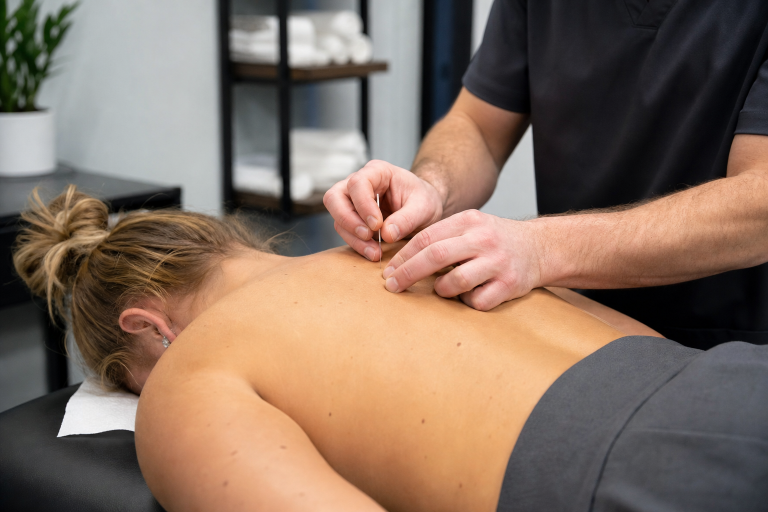
Patients researching acupuncture vs needling often notice that both treatments use very thin, solid needles. However, similar equipment does not mean the treatments are identical. Their clinical goals, point selection, evaluation methods, and provider training can differ.
At Denver Physical Medicine, dry needling may be considered as part of a broader plan for musculoskeletal pain, movement limitations, and rehabilitation needs. The right approach depends on the source of symptoms, medical history, examination findings, and the patient’s functional goals.
How Are Acupuncture and Dry Needling Different?
Acupuncture and dry needling can overlap in the sense that both involve inserting fine needles through the skin. The most important difference is usually the clinical reasoning behind the procedure. Acupuncture is rooted in traditional acupuncture theory, with treatment points selected according to that framework. Dry needling is generally used within a musculoskeletal assessment and rehabilitation setting.
A Simple Comparison for Patients
- Dry needling: Often targets sensitive muscle bands, trigger points, connective tissue, and areas that may contribute to pain or restricted movement.
- Acupuncture: Uses acupuncture points selected through the practitioner’s training and treatment system.
- Dry needling goals: May include reducing muscle sensitivity, improving movement, and helping a patient participate more comfortably in rehabilitation.
- Acupuncture goals: May address pain and other concerns based on an acupuncture evaluation.
- Care setting: Dry needling is commonly combined with physical medicine, therapy, exercise, and rehabilitation strategies.
Neither option is automatically best for every person. Patients should ask what the procedure is intended to treat, how progress will be measured, and whether the recommended approach fits their diagnosis and preferences.
How Does Dry Needling Work?
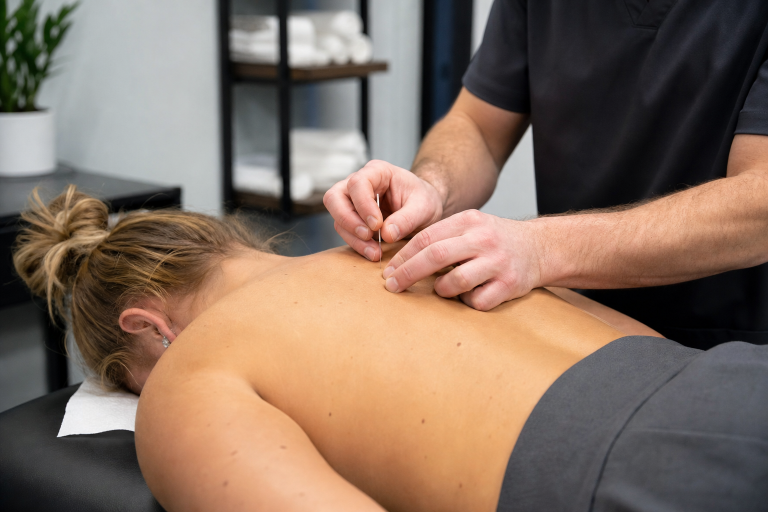
A dry needle contains no medication or injectable substance. During treatment, a trained provider inserts a sterile, single-use needle into selected tissue, often in an area of muscular tightness or tenderness. Some people experience a brief prick, pressure, muscle twitch, or short-lived soreness afterward.
At Denver Physical Medicine, dry needling can be considered for selected muscle and movement problems affecting the spine, joints, or surrounding soft tissues. It is not intended to replace a complete evaluation. Instead, it may serve as one tool to help reduce barriers to movement and support the next steps in care.
What Conditions May Benefit From Dry Needling?
Dry needling may be appropriate for some patients with muscle-related pain or restricted movement. A professional examination is important because pain in the same area can have very different causes.
- Neck, upper-back, and lower-back muscle pain
- Muscle tension associated with sciatica symptoms
- Headaches that may be linked to neck or shoulder muscle tightness
- Shoulder, hip, knee, or other joint-related movement limitations
- Muscle strains, spasms, and soft-tissue irritation
- Persistent tightness after an injury
- Muscle discomfort connected to posture, scoliosis, or spine-related mechanics
Needling may address one contributing factor, such as muscle sensitivity, but it may not resolve the underlying cause of pain by itself. Strength deficits, limited mobility, spinal mechanics, work demands, and movement habits may also need attention.
What Does Research Say About Dry Needling?
Research suggests that dry needling may help some people with musculoskeletal pain, but the findings vary across conditions and treatment methods. A 2024 systematic review of 26 randomized clinical trials found that outcomes differed according to the diagnosis, comparison treatment, and follow-up period. The review rated the available evidence as low to moderate quality, which supports a cautious, individualized approach rather than guaranteed claims.
Research on acupuncture also supports careful expectations. The National Center for Complementary and Integrative Health explains that acupuncture may be helpful for certain pain conditions, while the strength of evidence and likely benefits depend on the condition being treated. Learn more through the NIH overview of acupuncture effectiveness and safety.
Why Does a Personalized Care Plan Matter?
Denver Physical Medicine serves Denver and the greater Denver metro area with chiropractic care, physical medicine and therapy, rehabilitation, and care focused on scoliosis and spine conditions. This broad approach matters because meaningful improvement often requires more than temporary pain relief.
Elements of a Thoughtful Plan
- Review symptoms, health history, activity limits, and treatment goals.
- Assess posture, mobility, muscle function, strength, and relevant spine or joint findings.
- Identify potential contributors, including trigger points, weakness, restricted motion, or injury history.
- Determine whether dry needling, therapy, chiropractic care, rehabilitation, or another service is appropriate.
- Track pain, movement, strength, and day-to-day function over time.
Is Dry Needling Safe?
When performed by a properly trained professional using sterile technique, dry needling is generally considered low risk. Mild soreness, bruising, minor bleeding, fatigue, or temporary discomfort can occur. More serious complications are uncommon but possible, which is why appropriate training, anatomy knowledge, screening, and informed consent are essential.
Before treatment, patients should disclose blood-thinning medications, bleeding disorders, pregnancy, significant health conditions, a history of fainting, and concerns about needles. Contact the clinic promptly for severe, unusual, or persistent symptoms after treatment.
What Can Patients Expect at Denver Physical Medicine?
A visit may begin with a discussion of symptoms, medical history, daily activity limitations, and goals. The provider can then assess movement, muscle function, posture, and relevant spine or joint concerns. If dry needling is appropriate, the patient should receive an explanation of its purpose, possible sensations, expected aftereffects, and role in the wider treatment plan.
Follow-up care may include mobility exercises, strengthening, physical therapy, chiropractic care, rehabilitation, or additional strategies based on the patient’s response and condition.
Frequently Asked Questions
Is dry needling the same as acupuncture?
No. Both may use similar needles, but dry needling typically focuses on musculoskeletal findings and movement-related goals, while acupuncture follows its own traditional clinical framework.
Does dry needling hurt?
Sensations vary. Patients may feel a brief insertion sensation, pressure, a twitch response, or short-term soreness. A provider can explain what to expect before treatment begins.
How many sessions will I need?
There is no universal schedule. The number of visits depends on the diagnosis, duration of symptoms, progress, functional goals, and whether dry needling is combined with rehabilitation.
Can dry needling help with back or neck pain?
It may help selected muscle-related components of back or neck pain. An examination is needed to determine whether it is appropriate and what other care may be beneficial.