We tend to prepare for the obvious things—first fevers, scraped knees, the seemingly endless daycare colds that go on until graduation.
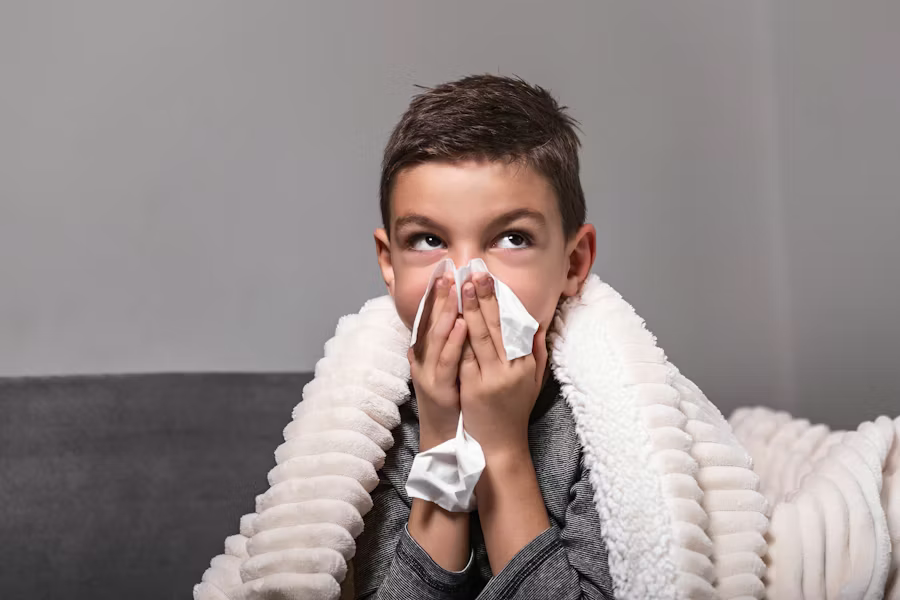
Via Unsplash
However, the allergy maze tends to catch many families off guard—not the allergies themselves—but the confusion surrounding them—the mixed messages, the “could this possibly be an allergy?” moments, the contradictory advice from well-intentioned individuals, and the quiet concern we harbor when our child’s symptoms don’t fit the tidy bullet points we’ve read online. That is the allergy confusion no one warns you about.
The Allergic Cold: When a Mild Cold Puts On a Disguise
One of the more surprising twists of fate for parents is when their child comes down with a cold, develops some congestion, some runny eyes, maybe a slight cough, and we naturally assume it is a cold (and, fair enough, that is usually the safest assumption for the majority of childhood).
However, when that cold lingers on for ten days, and then continues to linger for three weeks, and continues to hang around as a house guest (no fever; energy level mostly normal), yet the nose is in a long-term commitment to chaos, that is when the allergy confusion begins.
Endless mild “colds” are a hallmark of allergies, particularly when nasal symptoms dominate. Children can appear sick without really being sick. And that gray area can be very emotionally draining because you never know when to rest, when to treat, when to test, and when to just wait it out.
The Food or Not Food?
Parents also get drawn into a second and more stressful puzzle—food.
A rash breaks out after eating strawberries. A tummy ache occurs after drinking milk. A red face develops around dinner time. Was it the food? Was it a virus? Was it a new detergent? Was it just a coincidence?
The difficult part is that reactions can be immediate or delayed. Some will be mild. Some will be dramatic. Some will not be allergic at all.
For instance, food intolerance can be quite unpleasant, but it is not the same as having a food allergy. Lactose intolerance is a common example.
Lactose intolerance hurts, but it is a different mechanism and a different risk profile than a true milk allergy. Understanding that difference is important because it impacts how cautious you should be, and what type of testing or guidance is warranted.
Skin Symptoms That Say Everything and Nothing
Eczema can flare due to environmental factors such as dry weather, harsh soaps, sweat, stress, and infections. Additionally, eczema can flare due to allergens, but it is not always a clear-cut map. As such, parents may feel as though they are failing a secret test. You try changing lotions. You switch laundry detergents. You cut back on eggs. You add probiotics. You wonder if you imagined the improvements.
The Often-Overlooked Role of the Nose, Ears, and Throat
A large number of parents do not know how extensive allergy symptoms can be in the ENT zone. Chronic nasal congestion can cause sleep disturbances. Mouth breathing is a possible result of this type of disruption. Ear issues can occur as well. This can create an image of unassociated problems.
A holistic view on how to address the problem would likely benefit many people. It is that rare, but sanity-saver when you learn about ENT specialists and allergy care teams collaborating to help determine why your child has chronic nasal congestion, recurring sinus patterns, ear problems, or why there is such a large overlap between infectious diseases and allergic inflammation.
If your child’s symptoms appear in the upper respiratory area, a team-based approach to understand the reason for these symptoms will most likely be the best.
The Myth of the Single Perfect Trigger
Parents generally hope to identify a single culprit—a cat, a carpet, a peanut. However, many children have layers of sensitivities—some dust sensitivity, some pollen sensitivity during a specific season, and a compromised skin barrier. These combinations can create a nearly constant low-level problem that can worsen when the environment changes.
You may only realize the pattern after holidays, a new school year, or a move to a new home. The timing may seem arbitrary at first. It is not always arbitrary, but it is not simple either.
The “They’ll Grow Out of It” Comfort Trap
A few kids grow out of some food allergies. A child growing out of an allergy can be an easy way to let time pass instead of doing something about it.
Here is a great question to consider asking yourself. Are you just waiting for your kid to grow up with a problem that can be treated better or worked on today?
Strategies to Reduce the Guesswork
You don’t have to have the ideal strategy-you simply want to have a peaceful one.
Look at these options:
- Track it loosely. Making light notes on your cell phone will help you recognize patterns without turning your whole life into a spreadsheet.
- Focus on what works. If your child is consistently getting poor sleep, consistently missing school, or consistently has an overall feeling of being uncomfortable, there is a high likelihood that you will need to get some additional support.
- Don’t eliminate foods from your child’s diet, especially young children, without proper advice. Nutrition is vital.
- Notice your child’s surroundings. Environmental factors such as seasonal changes, bedding, soft stuffed animals, moisture levels, and indoor air quality can be contributing to this issue much more than you know.
Clarification Brings a Type of Reliability
Perhaps the most infuriating reality regarding childhood allergies is that they can be subtle, persistent, and ever-changing. That is why parents experience confusion. However, you are not hallucinating. You are not excessively sensitive. You are reacting to a genuine pattern that is merely presenting itself through a variety of disguises. Through careful observation, sufficient support, and a thoughtful plan, the haze will eventually dissipate.