
With online competition at an all-time high, understanding how to enhance your website’s visibility and ranking in search engines is among the most valuable digital marketing skills. Search engine optimization (SEO) is the art and science behind this, divided into two major branches: on-page and off-page SEO. Developing a robust strategy demands understanding both approaches, as well as the synergy between them. Whether you’re optimizing your own site or seeking to outpace competitors in your market, mastering both on-page and off-page SEO provides the strongest foundation for long-term growth. Learn more about local strategies from https://victorious.com/houston-seo-company/ for actionable insights.
These two sides of SEO not only serve different technical functions but also employ unique strategies to drive website success. While on-page SEO focuses on everything you can directly control within your site—content, meta elements, and technical infrastructure—off-page SEO extends outward, harnessing external signals that bolster your reputation and authority in your niche. As the digital landscape becomes increasingly crowded, finding the right balance between on-page and off-page initiatives is more crucial than ever in helping your audience discover you amidst a growing sea of competitors.
What Is On-Page SEO?
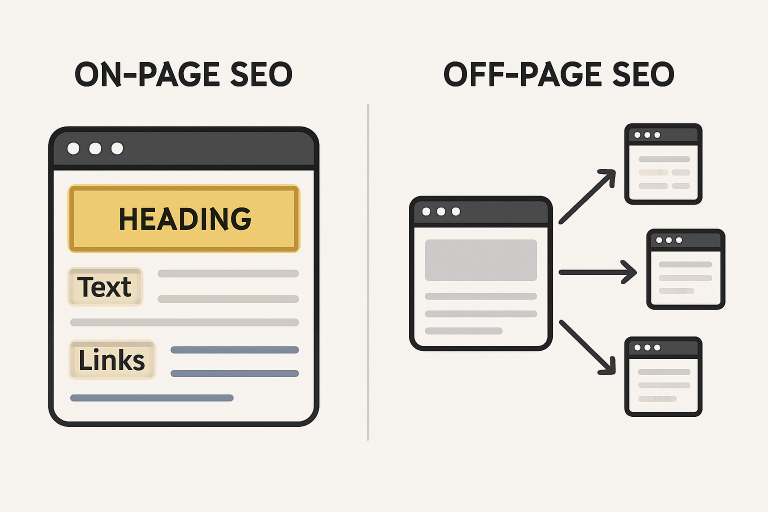
On-page SEO refers to all optimization actions performed directly on your website. This is the cornerstone for ranking improvements, as search engines assess your website’s content quality, organization, and usability. The basics of on-page SEO include careful content creation, technical optimization, and continuous refinement based on analytics and user feedback. When done well, on-page SEO ensures that your site is both valuable to visitors and easily understood by search engine crawlers.
- Content Quality: Developing original, engaging, and informative content that aligns with what users are looking for. High-value content increases user dwell time and encourages return visits. Additionally, content that addresses user intent can naturally attract organic backlinks and social shares, which further boost your ranking potential.
- Keyword Optimization: Selecting and integrating the most relevant keywords into headings, titles, and naturally within page content. Tools help identify target search terms for your niche. Proper keyword placement helps search engines comprehend your topic focus and rank your pages for relevant queries.
- Meta Tags: Crafting unique and appealing title tags and meta descriptions. These act as a “first impression” in search results, impacting both ranking signals and the frequency of your pages being clicked. Well-written meta tags can help distinguish your site from competitors and significantly increase your click-through rate.
- URL Structure: Keeping URLs clean, readable, and descriptive aids both search engines and users. For example: /on-page-vs-off-page-seo/ clearly signals what your content is about. User-friendly URLs also make sharing and remembering your pages easier.
- Internal Linking: Strategically linking pages within your website not only helps users navigate more effectively but also passes SEO value to important pages and topics. Effective internal linking can improve page authority distribution and guide users to related information, enhancing engagement and reducing bounce rates.
- Mobile Responsiveness: Ensuring your website looks and functions equally well on all device types is crucial, as mobile searches now outnumber desktop searches worldwide. A responsive design adapts gracefully to varying screen sizes, maximizing usability and search visibility.
- Page Speed: Optimizing images, scripts, and code to reduce load times provides a better user experience and is favored by search engines. Fast-loading pages keep visitors engaged longer and contribute to higher conversion rates.
What Is Off-Page SEO?
Off-page SEO focuses on all actions taken outside of your website to improve its position in search engine rankings. The primary objective is to build domain authority, reliability, and reach through third-party validation and engagement. Core aspects include earning credibility from external sources, which often requires ongoing relationship-building, reputation management, and targeted outreach campaigns.
- Backlinks: Earning high-quality inbound links from respected sites signals authority and trustworthiness. Link-building strategies include creating shareable resources, guest posting, and networking with industry leaders to secure mentions on reputable platforms.
- Social Media Engagement: Sharing and promoting content through social channels increases reach, traffic, and sometimes organic link acquisition. Building an active and authentic social media presence enhances brand visibility and increases the discoverability of your content to new audiences.
- Brand Mentions: Getting your brand featured in forums, review sites, and online publications can foster credibility, even without a direct backlink. Positive mentions in trusted spaces enhance your brand’s reputation and awareness among potential customers and search engines alike.
- Influencer Outreach: Building relationships with key influencers can drive significant traffic, brand awareness, and potential link opportunities. Strategic collaborations and endorsements help expand your network and amplify your message beyond your immediate reach.
Key Differences Between On-Page and Off-Page SEO
While both types of SEO aim to enhance your search presence, there are distinct differences in their methods and outcomes. Recognizing these differences enables you to tailor your strategy for optimal results, leveraging the strengths of each approach to create a unified and powerful SEO campaign.
- Control: On-page SEO is within your direct control—every improvement happens on your website. Off-page SEO, in contrast, depends on actions taken by others or through partnerships outside your website.
- Focus: On-page strategies improve the content, usability, and organization of your site. Off-page SEO focuses on external signals, such as quality backlinks and brand visibility across the web.
- Techniques: On-page SEO encompasses keyword and content optimization, as well as technical fixes. Off-page primarily involves outreach, relationship-building, and content promotion to earn links and brand mentions.
Balancing On-Page and Off-Page SEO
Achieving SEO success requires an integrated approach. Prioritize building a technically sound site with well-structured, valuable content. Once your foundation is strong, turn to off-page efforts, such as boosting authority through backlinks and engagement that foster trust. Both forms of SEO support each other: on-page improvements ensure external traffic is retained and converted. At the same time, off-page efforts raise your site’s perceived authority and widen its digital footprint.
According to Search Engine Journal, sites that possess both strong on-page signals and authoritative backlinks outperform those that focus exclusively on one discipline. Creating a balance—continuing to refine content and usability while earning respect and recognition elsewhere—maximizes your chances for sustainable, high rankings.
Common Mistakes to Avoid
- Keyword Stuffing: Overusing keywords in unnatural ways can reduce readability and trigger search engine penalties. Instead, focus on user intent and naturally weave key terms throughout your content for a seamless reading experience.
- Ignoring Mobile Optimization: Failure to deliver a seamless experience to mobile users results in lost opportunities and lower rankings. Invest in thorough mobile testing and design to ensure accessibility for every visitor.
- Acquiring Low-Quality Backlinks:Seeking links from irrelevant or spammy sites can harm your domain’s reputation and even lead to penalties. Always prioritize relevance and source authority when developing backlink strategies. Poor quality links are often easily detected by search engines and can undermine your optimization efforts if left unchecked.
Final Thoughts
Both on-page and off-page SEO are crucial in establishing a robust online presence that endures in an ever-evolving search landscape. By focusing on high-quality, user-centric content and strategically acquiring credibility through external channels, you can outperform your competitors and drive meaningful results for your business. Embrace a long-term, holistic SEO approach where ongoing refinement and adaptation become the key to sustainable growth and visibility.