The layout of your home can have a big impact on your overall happiness. But just what type of layout is better for your lifestyle – open plan or closed-off individual rooms? While an open-plan layout can have benefits such as spaciousness and better ventilation, closed off rooms can provide benefits like greater privacy and noise control. In this post, we’ll explore some of the benefits of both home layouts, so that you can determine which is best for your lifestyle.
The benefits of open plan living
More space for socialising
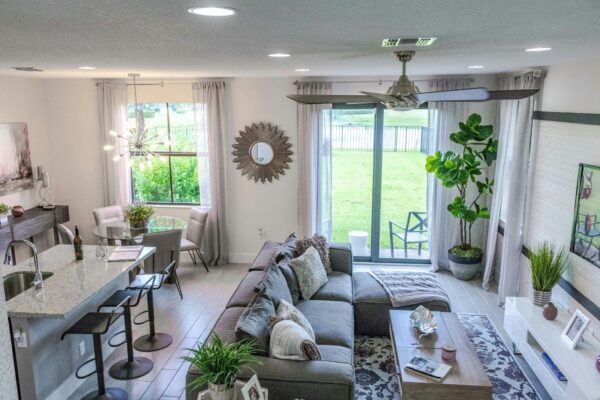
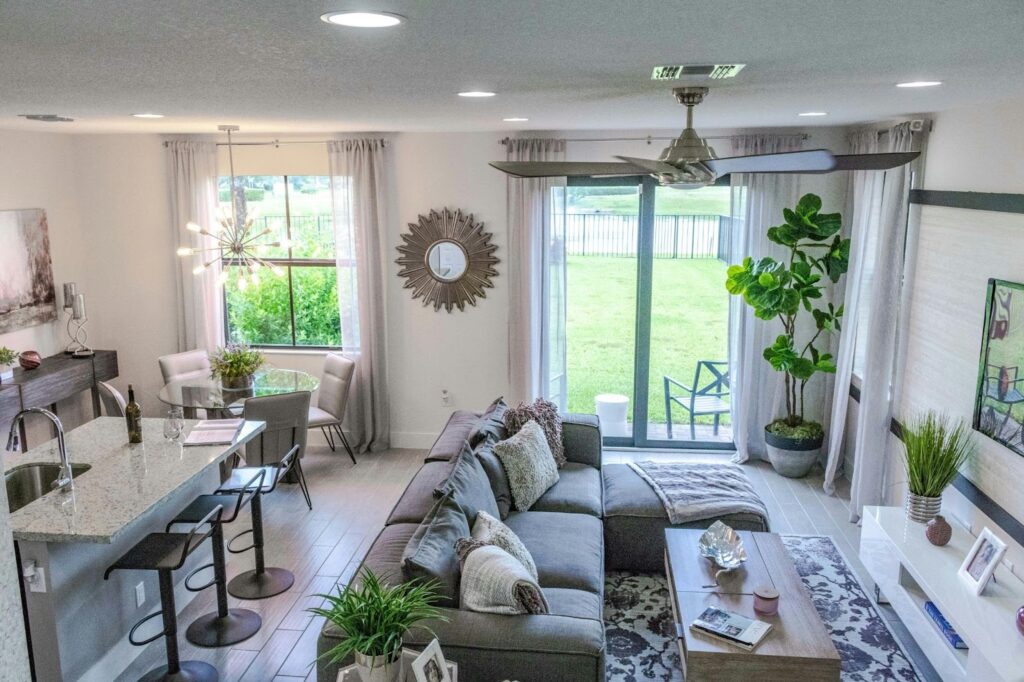
Open plan homes are great for large family gatherings and parties as they provide plenty of space to mingle. Closed off rooms can limit how many people can gather in each room – which is fine if you don’t have a lot of guests over, but not-so-great if you want your home to be a hub of social activity. A lack of interior walls allows family members and friends to freely move around, turning rooms into interconnected spaces.
More space for furniture
Smaller rooms limit what types of furniture you can place in your home. Large open plan spaces give you more freedom to go big with dining tables or sectional sofas. You can also extend fixtures into other rooms such as extending a breakfast bar from a kitchen into a neighboring dining room. These spaces can also make it easier to move furniture in and out, as you haven’t got as many corridors and doorways to negotiate.
Better natural light reach
Properties with closed-off rooms can sometimes have inner rooms that don’t have windows or that may only have a small window. This can result in these spaces feeling gloomy. Open plan homes allow sunlight to reach the more inner parts of a property. As a result, open plan layouts can sometimes feel brighter and cheerier. You’ll also have more freedom when it comes to growing houseplants and may not be as reliant on electric lighting.
Better ventilation
Another benefit of open plan layouts is that they provide more space for air to circulate. Small closed-off rooms can end up feeling stuffy if windows aren’t left open or they don’t have good HVAC. Homes with closed-off rooms can also be more susceptible to issues like mould growth, high dust levels and high allergen levels. In open plan homes, such issues are much rarer or can typically be treated more easily.
Improved property value
Open plan layouts also tend to boost home value. If you’ve got a property with closed-off downstairs rooms and you’re thinking of selling it in the future, knocking through a few walls could potentially be a wise move for increasing the price tag. Of course, this tends to work better with relatively modern homes (knocking down interior walls in an older property may look less natural, and may reduce value). It’s also vital that you keep certain rooms like bathrooms and bedrooms closed off.
The benefits of closed-off rooms
Better privacy
Closed-off rooms are typically better for providing privacy, which some households may prefer. Homes with fully open plan layouts may not provide space to escape to for working from home, studying or personal calls. In fact, in such homes, the bedroom often becomes the only place to escape to for privacy, which may encourage certain introverted family members to spend more time in their bedroom.
Noise control
Sounds can travel more freely on open plan homes – these homes tend to be more echoey and noisy as a result. Sounds from the TV and appliances are able to drift through the house, while conversations can also travel. Those trying to concentrate on tasks may find this distracting, while those with hearing loss may struggle to focus on specific sounds due to background noise. When creating a hearing-supportive home, closed-off rooms may help to contain such sounds to certain parts of the home, allowing greater focus on immediate noise sources.
Odor control
Closed-off rooms can also prevent odors from traveling around the home. When cooking food, the smell of food can be contained to the kitchen. In open plan homes, these smells can circulate and make the whole home smell of food (which some people love, but others aren’t so keen on). If certain family members smoke, they can also smoke in rooms without cigarette smoke drifting through the entire home.
More wall space
Homes with closed-off rooms have more interior walls, which can provide more wall space for photos and ornaments. Such homes also tend to have more shelves and cupboards for storing items. Clutter can be much harder to contain in an open-plan home and there is less interior wall space to decorate (which may be a plus-side to some people, but a downside for those that want extra space for collectibles and souvenirs).
Easier to heat
Smaller closed-off rooms heat up more quickly. Not only is this useful in cold temperatures, but it can save money on energy bills (you can also more easily isolate heating to certain rooms, and even opt for different temperatures in different rooms). As a result, homes with closed-off rooms are often favored in locations with cooler climates, providing more of a cozy feel.
Which is best for your lifestyle?
Open plan homes are an excellent option if you want space to socialise, good natural light and ventilation. For people that regularly have guests over for parties and get-togethers, they can provide plenty of room for everyone to gather and mingle. For homes in humid climates, such homes may prevent mold growth. If you have allergies, open plan homes may also help reduce the build-up of allergens.
Closed-off rooms tend to be a better option if you want to be able to contain noise, odor and heat to specific parts of the home. They are good choices for families that want the option of privacy. They also tend to be a better choice for cooler climates, as they can help to trap heat in certain rooms and reduce energy bills.